Top 10 Websites for Literacy Leaders

The following list of websites are in no particular order. I did not rank preference, as I find all of these useful at different times for different things. I have included a brief overview, but I highly recommend checking each one out to see the true potential.

Teaching Tolerance

This link takes you to a section of the Teaching Tolerance website related to literacy. This website overall has tons of lessons and professional development for teachers in all subject areas. I think every teacher leader should make this website a regular stop. The self-guided learning for professional development and the instructional resources offer a wide variety of tools for teachers who are looking to boost the cultural relevance of their pedagogy.

The Literacy Shed

This website is a pretty new discovery of mine. The basic premise is that literacy education can be enhanced through moving and still images. Made by a primary school teacher, there seems to be a plethora of resources available to amp up any lesson. There are also spotlight books that are shared on a weekly basis. There are different levels to the website, with some content that can only be accessed through a paid membership. I look forward to exploring this website further.

OER Commons

OER Commons is a public, digital library of educational resources. You can search for resources based on grade level, as well as standards. They are Common Core aligned. From your search, you will be given links to a wide variety of lessons, resources, and other educational websites. This resource would be wonderful for helping get teachers started in finding new lessons and material for different standards based topics.

Reading Rockets – Lead for Literacy

This is just one small aspect of the Reading Rockets website. However, I think it is worth pointing out on its own. This area provides short, readable memos about early literacy education (birth – 9). They are geared toward policymakers and literacy leaders. The research group backing this comes from Harvard University and is supported by many literacy experts.

Voice of Literacy

This is a collection of blogs and podcasts about a variety of important literacy topics. It is a great place to start a search when looking for expertise in regard to different areas of literacy

Jim Knight Instructional Coaching Blog

I have only read a view of his blog posts on instructional coaching, but he seems to have a strong foundation of knowledge and an interesting perspective. He cites and provides links for his research to serve as opportunities for his readers to dig deeper.

Fisher and Frey You Tube Channel

I highly recommend checking out the using data to plan video on this channel. There are also a few other good videos as well.

ReadWriteThink

It seems wrong to compile a list like this without acknowledging this classic. It’s free and it contains high quality reading and writing resources. There is something for everything and everyone!

Choice Literacy

I have only looked through the free materials and was very impressed. The website offers a variety of resources from a variety of diverse perspectives. They are real teachers and literacy leaders who have had experience working with children on reading and writing.

Key To Literacy – Free Resources

Check this website out for articles, videos, and webinars about a variety of literacy topics. There are also lots of other resources available even through their free membership.
Setting up for Success – Start Professional Development with a Growth Mindset

A growth mindset is necessary to be able to learn. It is not easy to learn new things, especially when those things are challenging. I like the idea of starting any professional development, especially if it is going to cover a challenging topic such as literacy, with some type of inspiration or motivating message. Below, I will share with you two of my favorites. These videos are great for any type of professional development setting.

You Can Learn Anything – Video from Khan Academy

This short video inspires a growth mindset to remind children and adults alike that they can in fact learn anything.

Every kid needs a champion. – TED Talk from Rita Pierson

If you need to remind teachers of their purpose, this video calls teachers to remember to connect to , relate to, and love their students. Rita is an incredibly motivating speaker and has a powerful message to share.

What are your favorite motivational videos? Messages like this transcend one single topic and can set up teachers for success. It is great to have a storehouse of videos like this to pull out at the right moment to get teachers excited, motivated, and engaged in professional development.

Teaching Vocabulary – A Professional Development Journey

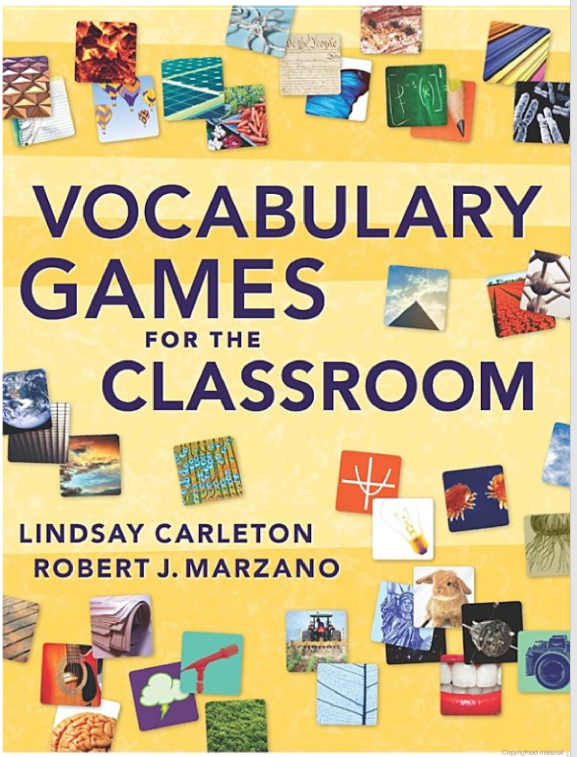
Last year, our Lower School participated in some professional development surrounding vocabulary instruction. We met as a collective group, K-5, discussing the implementation of activities from the book Vocabulary Games for the Classroom.

Carleton, L. & Marzano, R. (2010). Vocabulary games for the classroom. Marzano Research Laboratory: Bloomington, IN

This book focuses on the importance of direct vocabulary instruction. According to the authors, “our knowledge about and understanding of any topic is rooted in our mastery of the terms relevant to that topic” (Carleton & Marzano, 2010, p. 1). This idea led to a huge shift for my third grade team.

My team have always been teaching vocabulary in an explicit way. We were using a designated vocabulary curriculum called Wordly Wise in which students are given ten words to learn. Students were learning some incredibly beneficial vocabulary skills within this curriculum, but the words had no meaning outside of the curriculum. There was no connection to their wider educational world. Yes, students need to build their general vocabulary knowledge. But with such limited time, was there a way we could be doing better?

Our team decided to pilot a program in which we provided explicit vocabulary instruction within the context of our history and science units. We would still provide explicit vocabulary instruction, in which students would have to learn the meaning of words, as well as use them in a variety of context, include analogies. Using the six steps of vocabulary instruction laid out by Carleton and Marzano (2010), we

  1. provided the definition, an example, and an explanation of the word within the context of our teaching
  2. provided opportunities for students to describe, explain, and find examples in their own words
  3. required students to construct a visual representation of the word
  4. engaged students in activities to add to their understanding
  5. provided discussion opportunities for students
  6. provided opportunities for students to play games with their vocabulary words

So, here’s where our professional development came in. We had a strong plan for steps 1 – 5. Step 6 was something new. Yes, there are tons of games out there for practicing vocabulary words, but are some better than others?

Carleton and Marzano’s book provided us with the answer we needed. They had developed thirteen research based games in which students could practice their vocabulary words. Below, I will share with you two of my favorites.

Word Harvest (Chapter 1)

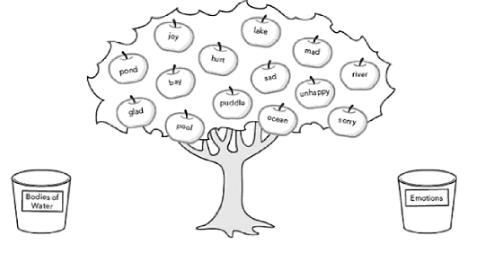
This game is a great way to review old learning, while also understanding new learning. Create two categories (Vikings & Romans) and write vocabulary words on apples that apply to each category. One at a time, students have to race to the board, choose a word and place it in the correct bucket. One team is required to find all the words that apply to their category. One way to extend this game is to require teams to define the words before points are allotted.

Magic Letter, Magic Word (Chapter 6)

This game is my all-time favorite. My students also LOVE it. We use this game to review after each of our science and history units. To set up this game, teachers organize terms or concepts alphabetically. Then, teachers write clues for each of the terms or concepts. Now it’s time to play.

The teacher displays the first “Magic Letter”.

Magic Letter: C

Clue: A group of people from one country who build a settlement in another land

Colony

Students have to use the magic letter as the clue to guess the word or concept that is the “magic word”. I have my students use white boards and create a PowerPoint that reveals all the magic letters and magic words. It is such a great game!

The whole group professional development, using this wonderful text, allowed my team to change and develop a new vocabulary program that was much more meaningful, engaging, and beneficial to our students’ development. Our monthly meetings allowed us opportunities to come together and discuss our new implementations, provide and get feedback from peers, and collaborate on how to continue to make important changes. It felt meaningful and important, therefore all teachers were engaged in the professional development experiences.

Want your own copy of this book? Here is a link to Amazon to preview the text or make a purchase.

Meaningful Professional Development

We have all been there…another meeting after school titled as professional development, that ends up being a complete waste of time for all those involved. Afterward, as teachers are walking back to their classrooms, reflecting on the hour spent, people are saying things like “It didn’t have anything to do with me.” or “They didn’t even give us any ways to apply this to our classroom.” or “This is going to be another one of those one and done type meetings.” or “I don’t understand why they don’t ask us what we want to be working on.”

Adults are highly motivated to learn. They are generally goal oriented and passionate about growth and development (Lyons & Pinnell, 2001). However, all learning requires “ownership (wanting to learn the information)” (Lyons & Pinnell, 2001, p. 3). So often this is where administrators lose out on opportunities to engage their teachers. Teachers need to feel like they have something at stake in the learning experience. They need to have ownership over the problems they wish to solve and they need to feel like their time is being well spent in any professional development setting. In other words, teachers need to feel like they are in a constructive learning environment, an environment in which they can learn something meaningful to bring back to their daily classroom experience.

What does this look like? According to Lyons & Pinnell (2001), there are eight Constructivist Principles:

  1. Encourage active participation
  2. Set up small group discussions among people with shared concerns
  3. Provide context when introducing new concepts
  4. Create a safe environment
  5. Through conversation and shared experiences, help teachers develop their conceptual understanding.
  6. Allow teachers to use schema to construct new knowledge
  7. Track shifts in understanding over time
  8. Provide additional learning and experiences for those who need continued development around a topic.

Think about the best professional development experience you have had as a teacher. How many of these boxes does it check? Now think about the worst. What’s the difference? What was missing?

References:

Lyons, C. A., & Pinnell, G. S. (2001). Systems for change in literacy education: A guide to professional development. Porsmouth, NH: Heinemann.

Twenty-First Century Literacies: What are they?

If there is one idea that has become a “buzz phrase” of education recently, it is this: twenty-first century literacies. What do you think of when you hear this phrase? Perhaps, you think about the “literacies associated with technology and digital learning practices in and out of school” (Shearer, Carr & Vogt, 2019, p. 228). However, this only brushes the surface. In reality, 21st century literacy encompasses “how students will be expected to use these tools to collaborate, problem solve, engender equity and social justice, and develop and sustain relationships. It calls for students to participate in and shape the future within a global community” (Shearer et. al. 2019, p. 228). That is a lot to take in. What 21st century literacy really requires is to develop students into independent, self-motivated critical thinkers; students who do not shut down at the sight of a challenge, who instead draw forth from their toolbox of critical thinking strategies to meet a new challenge head on.

Eric Schmidt, the former Google CEO, sums up his view of 21st century literacies by saying “teaching will be learning how to ask the right questions. I was taught to memorize. Why remember it? Now you just need to learn how to search for it. Instantaneous access really changes your life. What never changes is the need for curiosity. What you really need to do is teach people to be curious” (Harvey & Goudvis, 2017, p. 30).

Critical Thinking Skills

Critical thinking is not something that can be taught in a series of mini-lessons in the way that a student can be taught the algorithm for multiplication of two-digit numbers. Critical thinking requires students to develop a plethora of thinking skills across disciplines and over time. Some of these skills include analyzing, classifying, persuasion, synthesizing, and interpretation (Zwiers & Crawford, 2011).

Let’s talk about these skills within the context of critical literacy. Students might be asked to use several different Internet sources to learn something new. In order to do so, students need to be able skeptically question and evaluate the information they are reading, all important critical thinking skills.

References:

Harvey, S., & Goudvis, A. (2017). Strategies that work: Teaching comprehension for understanding, engagement, and building knowledge (Third ed.). Portland, ME: Stenhouse.

Shearer, B. A., Carr, D. A., & Vogt, M. (2019). Reading specialists and literacy coaches in the real world (Fourth ed.). Long Grove, IL: Waveland Press.

Zwiers, J. C. (2011). Academic Conversations: Classroom Talk that Fosters Critical Thinking and Content Understandings. Portland: Stenhouse.

Comprehensive Literacy Programs

Image result for literacy quotes

Literacy is everything. Literacy paves the way to success in all aspects of life. As a teacher, it is the number one, most important skill that your students must learn. However, teaching literacy is highly complex, requiring expertise in a wide variety of topics and skills. Because of all of these reasons, schools must have an effective, comprehensive literacy program.

What are comprehensive literacy programs?

In order to better understand the components of a comprehensive literacy program, it can be helpful to look at programs developed by other school districts and then use that information to draw conclusions.

Let’s start by looking at Local Elementary Literacy Plan for Minnetonka. The full text can be found here. Minnetonka describes their local literacy plan as “an information storehouse and agenda that holds the goals for student reading proficiency by Grade 3 and then documents the action steps taken toward achievement of these objectives” (Minnetonka Public Schools, 2017). This literacy plan goes on to outline the goals and objectives of assessment, communication, instruction, intervention, and professional development. I was particularly impressed by the section that lays out the essential literacy learning at each grade level in easy to read, parent friendly questions. Here is an excerpt from one of the third grade sections:

Next, lets look at the Literacy Plan for Eden Prairie. Again, the full text can be found here. The literacy plan for Eden Prairie is much less extensive then that of Minnetonka. However, many of the same aspects exist. Eden Prairie outlines their overall literacy objectives including “build strong content knowledge…respond to the varying depands of audience, task, purpose, and discipline…comprehend as well as critique” (Eden Prairie Schools, 2017).

Similar to Minnetonka, Eden Prairie’s literacy plain includes assessment, parent notification and engagement, intervention, and staff development.

One aspect of their plan that impressed me was the focused information about their Professional Learning Communities. It shows that they strive to keep PLCs student focused through these four essential questions:

” 1. What is it we want all students to learn?

2. How will we know each student is learning?

3. What will we do when some students are not yet learning?

4. How will we extend and enrich learning for students who have already mastered essential standards? ” (Eden Prairie Schools, 2017)

So what conclusions can we make? A well thought out literacy program or plan includes some of the same general requirements. Comprehensive literacy programs include sections on assessment. How will schools identify struggling students? What assessments will be given and when? How will schools progress monitor? There is also information about how schools and districts will continue to improve through intervention programs and professional development. Finally, districts include information about communication with stakeholders (parents, community members, board members, etc.).

So why do they matter?

Other than being required by law, local literacy plans show that districts are committed to the development and improvement of literacy in their district.

Any reading teacher knows that literacy instruction is highly complex. As you reflect on all that goes into teaching a child to be a literate person, “think about the reading materials, methods, approaches, and supplemental resources that need to be in place in order for teachers to achieve success in teaching children to read and write” (Shearer, Carr, & Vogt, 2019, p. 200). As a teacher, a district’s plan shows a commitment to all of these things.

Further, comprehensive literacy plans and programs help ensure that there is a clear thought process behind literacy curriculum, instructional best practice, and student achievement. With all the complexities of literacy instruction, these plans help keep districts goal-oriented and organized.

References:

Eden priarie schools literacy plan. (2017). Retrieved from https://www.edenpr.org/cms/lib/MN01909581/Centricity/Domain/51/EdenPrairieSchoolsLiteracyPlan.pdf

Minnetonka public schools elementary (k-5) literacy plan. (2017). Retrieved from https://www.minnetonkaschools.org/academics/elementary/literacy-plan

Minnesota Department of Education, 2018. Local literacy plan development. (n.d.). Retrieved from https://education.mn.gov/MDE/dse/prof/dev/

Shearer, B. A., Carr, D. A., & Vogt, M. (2019). Reading specialists and literacy coaches in the real world (Fourth ed.). Long Grove, IL: Waveland Press.

Literacy Legislation

Did you know there is state and federal legislation that directly impacts your world as a literacy professional? Whether you are the literacy leader at your school, or a teacher working with students, it is helpful to know a little bit more about the legislation that exists, and impacts, your world. Let me take you on a journey through the national, state, and more local legislation that impacts literacy learning.

Federal Legislation

For so long, No Child Left Behind was the phrase that inspired fear and mockery alike. However, lots of people don’t realize that this education act has been replaced. In 2015, President Barack Obama signed the Every Students Succeeds Act (ESSA), turning over a new leaf for education legislation at the national level. The ESSA reauthorized the Elementary and Secondary Education Act (ESEA), as well as providing new opportunities for growth and improved educational outcomes.

The ESSA requires states to develop rigorous standards for achievement and to administer annual tests aligned to these standards. The state has the freedom to choose these standards and the assessment exists to communicate whether or not children have met these standards by the end of the school year. As an educator, this confirms the importance of knowing the state standards and progress monitoring student success in relation to these standards throughout the year.

States are able to develop their own accountability system for public schools. ESSA also grants flexibility to the inclusion of ELL students within this accountability system, acknowledging the time and energy needed for ELL students to develop English proficiency. States still release annual report cards about the health of a school. This information is made available to parents when making decisions about schooling for their children.

As a charter school educator, I thought I would include what ESSA has to say about charter schools. Charter schools are free, public, choice schools. Under ESSA the federal government can award grants and providing funding to eligible charter schools.

Here is the parent information PDF about ESSA. I have found this is the most simplified, helpful guide out there regarding this law.

Minnesota Legislation

Let me tell you a little bit about Minnesota Statute 120B.12 (2018). This statute calls for reading proficiency no later than the end of third grade. As a third grade teacher, this legislation is particularly meaningful to me. Here is what the statute states:
“The legislature seeks to have every child reading at or above grade level no later than the end of grade 3, including English learners, and that teachers provide comprehensive, scientifically based reading instruction”

Schools are required to identify, prior to third grade, students who are not reading at grade level. Schools are required to report this information, including to parents of these students at least once a year. Schools are encouraged to provide individualized intervention plans to help these students reach grade level by third grade. School districts need to provide staff development and create literacy plans in order to help meant this goal.

You might be asking, why is third grade such a big deal? According to an article by the Huffington Post, “data shows that children who cannot read by the third grade are four times less likely to graduate than students who can read by that age” (Fisher, 2016). They have the data to back it up. Further digging led me to this PDF, and the results are staggering. Third grade really does matter.

Minnesota Department of Education

As a public, charter school teacher, it is important for me to know what the Minnesota Department of Education (MDE) has to say about all this legislation.

Like all states, Minnesota needed to submit an ESSA plan, and 2018 – 2019 is the first full year of accountability. Here are a few highlights from the plan:

  • Minnesota will continue to administer the MCA assessment, which has been aligned to the most recent state standards.
  • The aim is to have 90% proficiency in reading and math by 2025, in order to significantly reduce the Achievement Gap
  • Minnesota will still work for school readiness as well as college and career readiness
  • Schools need to provide evaluation of teachers in order to identify effective versus ineffective teachers

These are just a few things highlighted in the plan. The plan also goes into detail regarding how schools will be evaluated and how and why additional support will be given to different struggling schools.

Resources:

Every students succeeds act Minnesota state plan executive summary. (2017). Minnesota Department of Education.

Fisher, O. (2016, September 07). Why third grade may be the most decisive year in a child’s education. Retrieved from https://www.huffingtonpost.com/entry/pivot-point-why-third-grade-may-be-the-most-decisive_us_57c740f4e4b0b9c5b7365945

Responsible Assessment

Testing has been an educational buzzword for quite a while now. It is also one of those buzzwords that elicits BIG feelings. Many people also use assessment and testing synonymously. In my mind, they are not the same. Testing exists to score children. Assessment exists to guide instruction. Both provide data. If we think of testing and the data we get from standardized tests such as the MCAs, that data is dead before teachers even have a chance to see it. Assessment data is critical to teaching and learning. It is important to note going further, this is the type of assessment data I will be discussing in this post.

Assessment serves a critical purpose in a classroom and in a school. This is particularly true with literacy. Teachers and literacy professionals need to know where their students are at in terms of literacy development. The data gained from assessments can directly instruct teaching and learning in a classroom.

Screening and Diagnostics

These are two types of assessments that can be particularly beneficial at the beginning of a school year or assessment cycle. Screening assessments can be given to a large group of students to help determine which students may need additional support or instruction. These screeners are the first step to identifying individuals with extra needs. From there, diagnostic assessments can be given to help determining where the student might be struggling. In my school, screeners and diagnostics are used to help determine tiered interventions. This information can also be helpful when communicating to parents about why their child has been placed in a Tiered support program.

Progress Monitoring

Screeners and diagnostics are not enough alone. Teachers, literacy instructors, and interventionists must be monitoring progress throughout the school year. This is the only way to determine if instruction or intervention is working. Progress monitoring only works if it is closely aligned to the instruction being given.

For example, in my classroom I recently taught a unit on Native American stories. My students worked on a variety of reading skills including summarizing, determining importance, theme, and character development. On their assessment, they were asked to apply these skills to a new Native American story. My assessment directly aligned to the instruction that was given. This way I could determine what skills my students had mastered and what additional support and review was needed.

Here is another example of progress monitoring within an intervention program. Our school uses a reading intervention program called Fast ForWord. One of the things that is particularly helpful about this tool is that progress monitoring occurs naturally within the program. The program automatically tracks data and provides progress information based on how the students complete activities. The program compiles data and can provide specific information for parents, teachers, and interventionists on a daily basis if necessary. This type of progress monitoring is beneficial to everyone involved because it provides accurate and timely data so additional supports can be given immediately to those students who need it.

What about those “tests”?

Standardized tests, such as the MCA, fall into the category of outcome measurement (Shearer et. al., 2019). These assessments are generally given at the end of the year and serve as a summative report card on student learning. The issue, for most teachers, lies in the fact that the data is essentially useless. The information provided after the assessment is vague and generalized. It gives information about students who the teacher no longer works with, months after the assessment has been given. Further, the information provides a snapshot of one day in time, with no acknowledgement of the human nature of the testing subjects. We all have bad days don’t we? Unfortunately, these are the assessments that get the attention, and they are the reason testing has such a bad reputation.

Assessment is critical to good teaching and successful student learning. We, as educators, need to make sure we are responsible assessors, using our tools to help students grown and develop as learners and only “testing” students if we are going to use the information to drive instruction. This is the trademark of responsible assessment.

Resources:

Fast ForWord Reporting & Assessment. (2018, May 15). Retrieved from https://www.scilearn.com/products/fast-forword/reporting-assessment

Shearer, B. A., Carr, D. A., & Vogt, M. (2019). Reading specialists and literacy coaches in the real world (Fourth ed.). Long Grove, IL: Waveland Press.

How are formal and informal assessments used to guide instruction?

Reading assessment has been an ongoing process for me as a literacy educator throughout my career. The question above was included on a list of questions to help guide data gathering for the literacy needs of a school (Shearer, Carr, & Vogt, 2019). Perhaps, my own journey is what caused this question to stand out to me.

Image result for teaching is a journey quote

My literacy assessment journey began five years ago when I started teaching at my current school. We use a reading assessment called STEP, from the University of Chicago. This reading assessment is one of the most comprehensive and rigorous assessments that I have every come across. It evaluates students in a variety of ways including fluency, oral comprehension, and written comprehension, and covers everything from retell, to factual, inferential, and critical thinking. However, this assessment is only given three times a year.

Another reason my journey began is that our school does not use any formal reading curriculum. Teachers are given freedom to use whole group and guided reading instruction to meet the needs of the students, while covering the state standards. However, this also means that there are no curriculum assessments to help track development and growth.

Assessment cannot be used to guide instruction if assessment doesn’t exist. This sounds like a such an obvious statement. However, I have had many conversations with teachers who don’t really know what their student’s don’t know. They have three checkpoints throughout the year to gauge understanding, but then spend the rest of the time in darkness.

In order to understand what to assess, teachers need to begin by understanding what students need to know. This is where I began. More specifically, I matched my knowledge of the third grade ELA standards with the test specifications for the Reading MCA. If you haven’t journeyed into that world, here is a .pdf to get you started.

From there, I developed units of instruction using a variety of trade books, covering all third grade standards. Using backward design, I created formative and summative assessments. Informal assessments were also included throughout the units. The individual lessons came from there. These assessments have been a game changer for my third grade team. We no longer feel like we are teaching blindfolded. We are able to identify gaps as we go, allowing for reteaching, differentiation, and remediation as necessary. We are no longer playing catch up, speeding ahead blind in order to take three steps back when quarterly assessment occurs.

My own personal journey now has the support of my entire third grade team. We have worked together to make our assessments stronger and more meaningful. However, this journey has exposed a larger need for my school. What are the other grade levels doing to assess throughout the school year? How are they using assessment to guide their instruction? Are they still relying on three snapshot assessments to guide learning throughout the year? This is a question I will continue to explore, and a journey I would be excited to go on with any other teacher who feel the drive to improve instruction.

References:

Shearer, B. A., Carr, D. A., & Vogt, M. (2019). Reading specialists and literacy coaches in the real world (Fourth ed.). Long Grove, IL: Waveland Press.

Want to learn more about the STEP Assessment?

https://uchicagoimpact.org/our-offerings/step

Why are literacy leaders important in K-12 school settings?

As educators, we face challenges “that cannot be solved by any one person” (Shearer, Carr, & Vogt, 2019, p. 71), therefore making it essential that teachers have support structures in place to help guide development and problem solving. Literacy leaders an an integral part of this structure.

Literacy leaders can fill a variety of roles, depending on the needs of the school. I have worked at several schools throughout my teaching career, and there are some needs that transcend school and district. These needs can be met, or at least facilitated, by a literacy leader. Needs such as working with struggling readers, supporting continued teacher learning, and oversight of school wide literacy programs.

Literacy leaders, in a 21st century school, are highly knowledgeable individuals who know how to best “implement the latest evidence-based practices” (Shearer et. al., 2019, p. 45). These leaders have the ability to make great change with struggling readers. This is an invaluable component of any K-12 school setting. Struggling readers exist in all grade levels, and struggle for a variety of different reasons. A literacy leader can serve as an interventionist, or oversee other reading interventionists. Either way, the extra support for struggling readers can have a huge impact on the success of a student and the health of a district.

Students aren’t the only ones who need continued literacy learning. Teachers need to continue to develop and hone their skills as literacy educators. Literacy leaders can fill this role in a variety of ways. First, they can serve as literacy coaches, helping teachers to be reflective practitioners in order to improve reading and writing instruction in their classrooms. Literacy leaders can also oversee school wide professional development opportunities. One could argue this role could be filled by any administrator. However, a literacy leader is viewing the professional development through a literacy lens, and will naturally have a stronger pulse on the literacy needs of the school, teachers, and students.

Last year, my school implemented a brand new Tiered reading intervention program. This program requires training, oversight, parent communication, and continued reflection on effectiveness. None of these things could occur if our school did not have a highly trained literacy leader. Our students, participating in the program, have had great results. This story shows the benefits of having a literacy leader in a school.

Image result for literacy quotes

References:

Shearer, B. A., Carr, D. A., & Vogt, M. (2019). Reading specialists and literacy coaches in the real world (Fourth ed.). Long Grove, IL: Waveland Press.